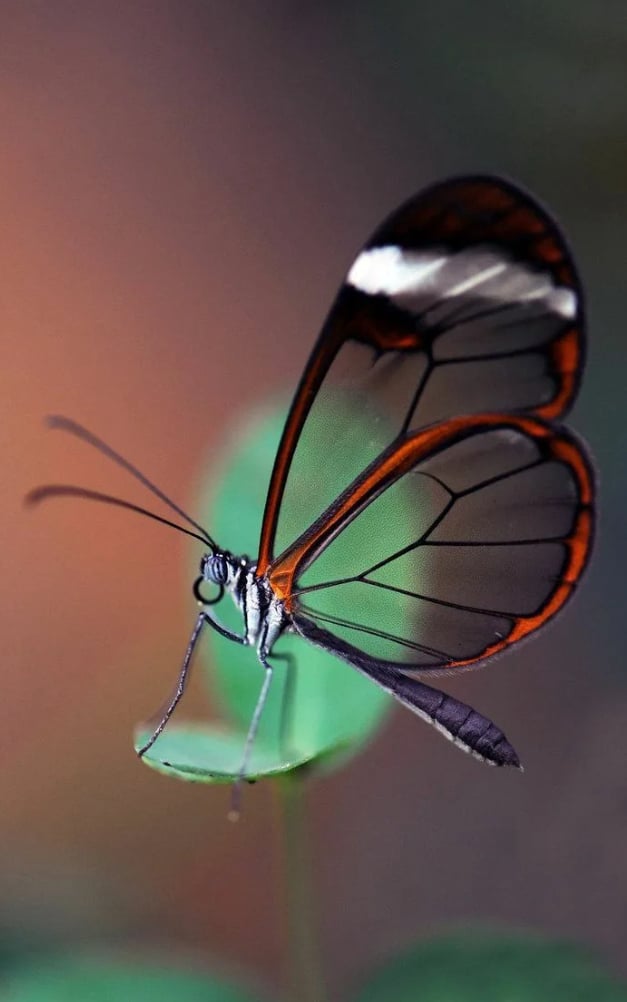
Glasswing
The Glasswing butterfly possesses a truly unique feature among its relatives: nearly transparent wings that allow light to pass through with minimal reflection. This transparency is achieved by special nanostructures on the wing surface that reduce glare and scattering. The effect makes the butterfly incredibly difficult for predators to spot, especially when it rests among leaves. Only the wing edges and veins retain subtle colors, often in shades of brown, orange, or white. This adaptive camouflage is one of the most elegant examples of natural engineering in the insect world.
Native to the rainforests of Central and South America, Glasswings are often observed gliding along forest edges and near streams. They are primarily active in the morning, when they search for nectar from a variety of flowering plants. Unlike many butterflies, they are known to visit a wide range of blossoms, contributing to pollination across diverse plant species. Their flight is gentle and drifting, almost appearing as if they are floating without effort. This delicate movement complements their ethereal appearance, making them a favorite subject for nature photographers.
The life cycle of the Glasswing includes a caterpillar stage that feeds on specific host plants in the nightshade family. The caterpillars are often striped and carry toxins derived from their food, offering protection against predators. Adult Glasswings are relatively long-lived for butterflies, sometimes surviving for several months under favorable conditions. They are also known to engage in a behavior called "puddling," where they gather on moist soil to absorb minerals. These fascinating habits make the Glasswing a constant source of wonder for those who study tropical butterfly communities.