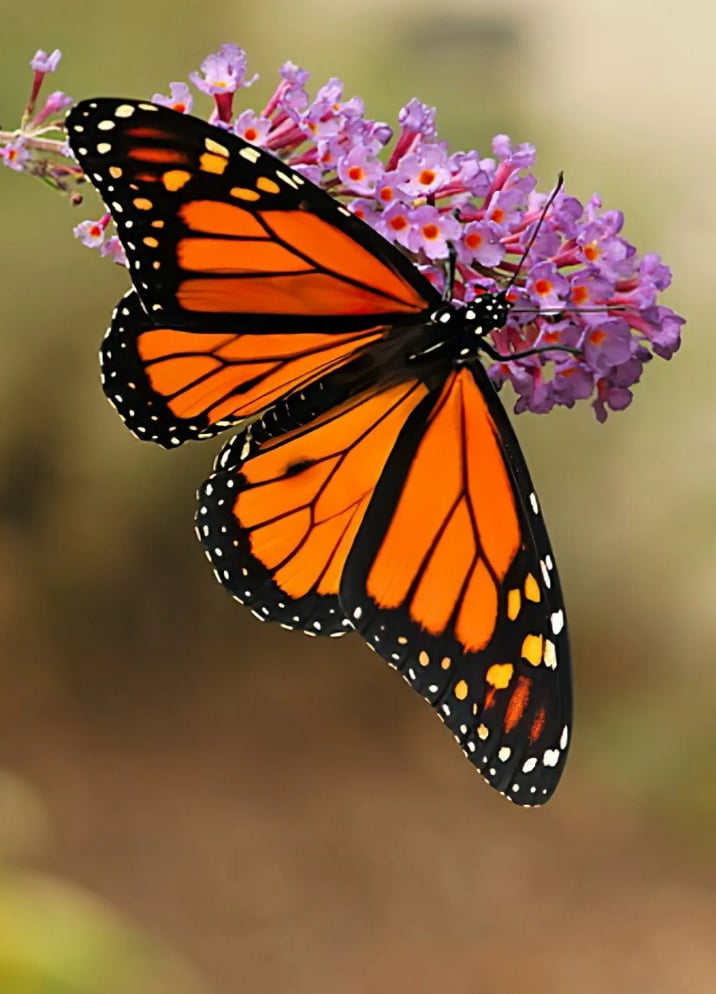
Monarch
The Monarch butterfly is celebrated for one of the most remarkable migrations in the insect world, covering thousands of miles each year. Its iconic orange wings bordered with black and white spots are instantly recognizable across fields and gardens. This coloration serves as a warning to predators, as Monarchs absorb toxic compounds from milkweed plants during their caterpillar stage. The toxins remain in their tissues throughout adulthood, making them unpalatable to birds and other hunters. This defense mechanism allows Monarchs to fly openly without excessive fear of being eaten.
Each fall, millions of Monarchs travel from the United States and Canada to overwintering sites in central Mexico and coastal California. They navigate using a combination of solar positioning and the Earth's magnetic field, a skill that continues to fascinate scientists. These butterflies gather in dense clusters on trees, creating spectacular orange blankets over forest canopies. The migration is not completed by a single generation; instead, several generations are involved in the round-trip journey. This multi-generational cycle ensures that the species persists despite the enormous distances involved.
Conservation efforts for Monarchs have become increasingly important as habitat loss and climate shifts affect their breeding grounds. Planting native milkweed and nectar flowers in gardens and public spaces provides critical support for their populations. The decline of overwintering sites in Mexico has prompted international cooperation to protect these unique habitats. Citizen science projects track Monarch movements and help researchers understand changing migration patterns. By participating in these efforts, ordinary observers can contribute to the long-term survival of this extraordinary butterfly.