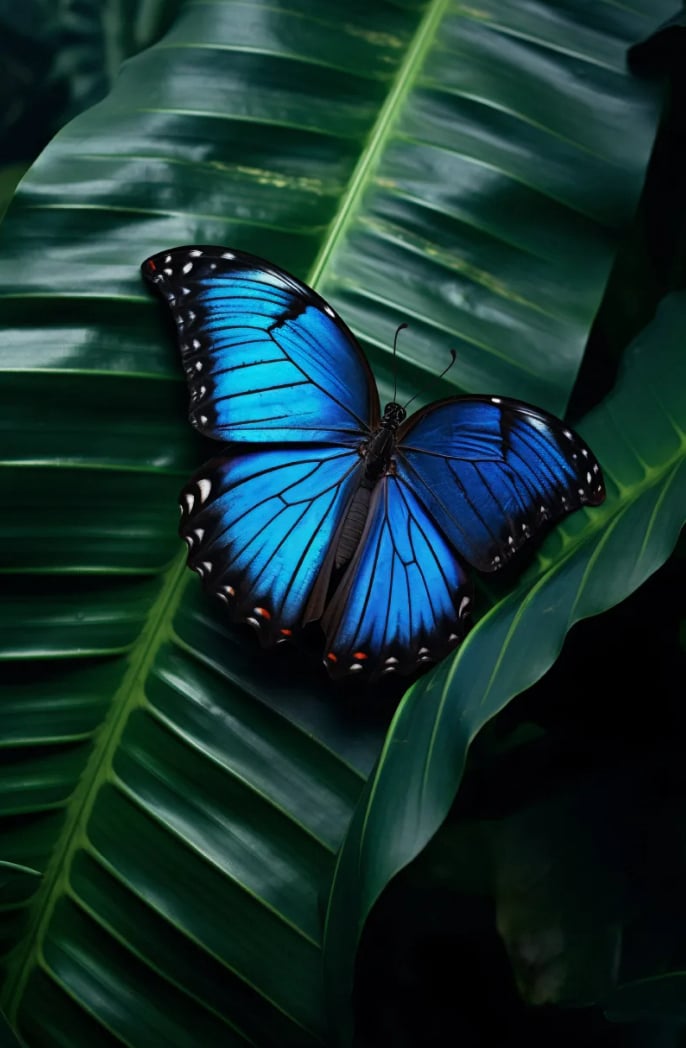
Blue Morpho
The Blue Morpho is among the most recognizable butterflies in the tropical forests of Central and South America. Its vivid blue coloration is not produced by pigments but by microscopic scale structures that reflect light in a unique way. This structural iridescence shifts from bright azure to deeper violet as the viewing angle changes. The effect serves both to startle potential predators and to communicate with other Morpho individuals. Observing a Blue Morpho in its natural habitat is an experience that stays with any nature lover.
These butterflies prefer the dense canopy layers of primary rainforests, often flying along riverbanks and forest clearings. They are most active during the morning and late afternoon hours when sunlight filters through the foliage. Their diet consists mainly of fermenting fruits, tree sap, and occasionally rotting plant matter. Unlike many butterflies, they rarely visit flowers for nectar, relying instead on fallen fruits for energy. This feeding behavior contributes to seed dispersal and nutrient recycling within their ecosystem.
The life cycle of the Blue Morpho includes four distinct stages: egg, caterpillar, chrysalis, and adult. Females lay tiny green eggs on the undersides of host plant leaves, primarily in the pea family. The caterpillars are reddish-brown with yellow markings and feed voraciously before pupating. The chrysalis resembles a dried leaf, providing excellent camouflage against predators. After about two weeks, the adult emerges, ready to begin its brief but brilliant aerial life.